
Viking Age Names and Their Meanings
Viking Age names were never just labels. They carried memory, ambition, family pride, and a sense of the world people lived in. A name could suggest strength, beauty, divine protection, inheritance, or fame. Many names from this period still survive because they are simple, vivid, and full of meaning. To understand them is to understand something about the values of the Norse world: courage, reputation, kinship, and the hope that a person might live up to the story hidden inside a name.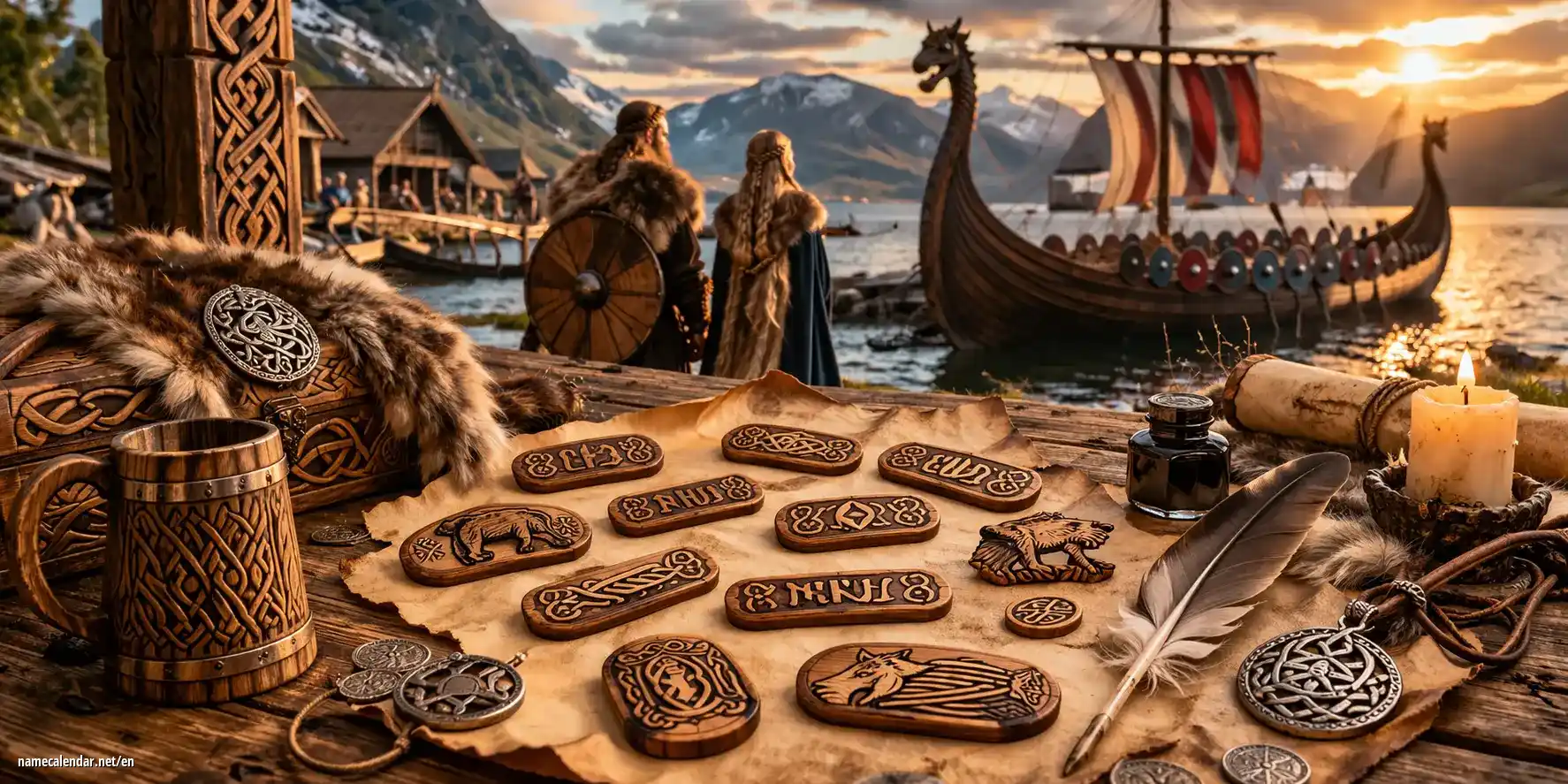
Why Viking Age names still matter
Names from the Viking Age continue to attract attention because they feel both ancient and immediate. They come from a world of ships, long journeys, trade routes, local assemblies, family alliances, and oral storytelling, yet many of them remain easy to recognize today. A name such as Erik, Astrid, or Bjorn sounds solid and memorable even to a modern reader. That is one reason these names have lasted: they are rich in history, but they are also direct, rhythmic, and clear.The Viking Age, usually dated from the late eighth century to the eleventh century, was not only an era of raiding. It was also a time of settlement, movement, law, farming, craftsmanship, and cultural exchange. Personal names reflected this broad social world. Some names emphasized rule, fame, or battle. Others pointed to animals, sacred powers, beauty, or protection. In a society where spoken reputation mattered deeply, a name could sound like a wish, a statement, or an inherited sign of belonging.
That is why Viking Age names are worth explaining in detail instead of presenting as a bare list. Their meanings help reveal how Norse people imagined identity. Many names were built from old linguistic elements that appeared again and again in different combinations. Once those elements are understood, the names become easier to read. A person begins to see patterns, and the names stop seeming distant. They become expressive pieces of language with a human purpose behind them.
How Viking names were built
Compound names and meaningful elements
Many Viking Age names were compound names, formed from two meaningful parts. This is one of the most important things to understand about Norse naming. Instead of being random sounds, names often joined elements that suggested power, beauty, battle, protection, animals, or divine links. A name like Harald combines ideas associated with army and rule, while a name like Sigrid joins victory with beauty. The parts mattered, and people recognized them.This structure gave families flexibility. Parents could choose a known pattern while still creating a name with a particular tone. Repeating one element from an ancestor's name could also help preserve family continuity. A family might reuse a part linked with wolves, victory, gods, or protection. In this way, naming was both personal and traditional. It allowed innovation within a familiar framework.
Single-word names and direct images
Not all names were compounds. Some were simpler and more image-driven. Bjorn means bear, and Ulf means wolf. Knut means knot. These names show that Viking naming could also be strikingly direct. A single strong image was enough. Such names were memorable, easy to use, and full of symbolic force. In a culture that valued vivid speech and strong comparison, a direct animal or object name could carry just as much presence as a longer compound name.Because of this mixture of compound forms and simpler forms, Viking Age naming feels both structured and alive. Some names sound noble and ceremonial, while others feel practical, sharp, and close to nature. Together they reveal a naming culture that was highly expressive without becoming artificial. The best Viking names endure because their meanings are easy to feel even after many centuries.
Names of rule, leadership, and reputation
Power in the language of kings and chiefs
Some of the most famous Viking Age names are names of rule. Erik is commonly understood as meaning something like sole ruler or eternal ruler. Its force lies in the idea of authority. The name sounds compact, but its meaning is large. It suits a world in which leadership was contested, visible, and deeply tied to personal reputation. When modern readers encounter Erik, they are hearing more than a personal label. They are hearing an old claim about command.Harald is another major example. It is usually explained through elements connected with army and ruler. This makes it a name of martial authority, one well suited to men remembered as kings, commanders, or founders. A name like Harald would have carried political weight because it joined military power with the right to lead. In the Viking world, rule was not abstract. It had to be defended, displayed, negotiated, and remembered. The name reflects exactly that atmosphere.
Another important name is Rolf, a later and simplified form connected to an older compound built around fame and wolf imagery. Even when the full early form shifted in pronunciation over time, the strength of the name remained. This shows how Viking Age names could survive through adaptation. The exact historical form mattered, but so did the emotional charge of the name. A powerful sound and a strong idea helped names live on.
Travel, inheritance, and continuity
Leif is especially interesting because it means heir or descendant. This is a reminder that Viking Age values were not limited to battle. Family continuity mattered intensely. Land, memory, rights, and obligations all passed through kin groups. A name like Leif expresses this social reality very clearly. It suggests not only a person, but a person in relation to those who came before. The future of the family was part of the meaning.Knut, meaning knot, may sound simpler at first, but it is also revealing. A knot binds things together. It can symbolize fastening, connection, and firmness. In practice, the popularity of Knut probably owes much to sound, tradition, and prestige, but the image of the knot fits a culture that valued ties of loyalty, agreement, and craft. Viking Age names often gained strength because they connected a concrete image with a broader human meaning.
Names of leadership and inheritance remind us that the Viking Age was organized through relationships as much as through conflict. People needed allies, successors, and remembered ancestors. A strong name could speak to all three. That is one reason names like Erik, Harald, Leif, and Knut remain central when Viking naming is discussed today.
Animal power and masculine identity
Bear and wolf imagery
Animal imagery was one of the clearest sources of power in Viking Age naming. Bjorn, meaning bear, is perhaps the best-known example. The bear suggested strength, danger, endurance, and physical presence. It was not a decorative image. It carried weight. A man named Bjorn bore a name that sounded grounded, formidable, and close to the natural world. This is one reason the name survived so easily into later Scandinavian use: its meaning is simple, and its symbolism is strong.Ulf, meaning wolf, works in a similar way but with a different emotional color. The wolf suggests cunning, intensity, and a dangerous edge. It can evoke both fear and admiration. In early northern culture, wolves appeared in myth, poetry, and symbolic language, so a name like Ulf would have resonated beyond the literal animal itself. It could imply ferocity, independence, or a feared reputation. Viking Age names often gained force from that kind of layered image.
Animal elements also appeared inside compound names. A family might keep repeating a wolf or bear element across generations, not because every child was expected to resemble the animal literally, but because the image carried prestige. Animal naming shows how closely the Norse imagination joined human character with the natural world. A name could make a symbolic comparison long before a person had spoken or acted.
Weapons, wood, and battle associations
Ivar is often explained as containing an element linked to yew, the wood associated with bows, together with a warrior element. Because yew was important for bow-making, the name is commonly interpreted along the lines of archer or yew warrior. Whether heard very literally or more broadly, the name belongs to a martial environment. It suggests skill, reach, and controlled force rather than sheer bulk. That makes it a useful contrast with a more physical image such as Bjorn.Names of this type reveal that masculine identity in the Viking Age could be expressed through different ideals. One name evoked the bear, another the wolf, another the ruler, another the heir, and another the armed fighter. These were not identical models of manhood. They overlapped, but each carried its own tone. Viking naming was rich because it allowed many kinds of admired qualities to be encoded in personal names.
Even today, names like Bjorn, Ulf, and Ivar feel vivid because they are built from images that remain easy to understand. They do not depend on abstract theory. They depend on bear, wolf, bow, strength, and survival. That directness is one of the secrets of their longevity.
Women's names, honor, and presence
Beauty, sanctity, and dignity
Female names from the Viking Age were no less meaningful than male ones. They often carried ideas of beauty, sacredness, wisdom, or victory, and they show that women were named within the same serious symbolic framework. Astrid is commonly explained through elements associated with god and beauty, giving the sense of divine beauty or godly strength joined with grace. The name is elegant, but it is not weak. It combines radiance with high status.Ingrid contains the divine element linked to Ing, an old fertility-associated god, together with an element often understood as beauty. Like Astrid, it shows that female names could place a woman within a sacred and honorable imaginative field. The beauty in such names is not trivial decoration. It is bound up with dignity, lineage, and the visible worth of the person who carries it.
Gudrun offers a different kind of depth. It joins a divine element with one connected to secret knowledge, counsel, or rune lore. That gives the name a thoughtful and even mysterious quality. It suggests that female identity in Norse culture could be linked not only with attractiveness or marriageability, but also with memory, speech, and interior knowledge. The endurance of Gudrun in literature and tradition reflects this richness.
Victory, will, and force of character
Sigrid combines victory with beauty, making it one of the clearest examples of a female name that joins martial success with feminine dignity. This tells us something important about Viking Age values. Victory was admired so deeply that its language could appear in women's names as well as men's. It did not automatically turn the name into a battlefield title. Instead, it added a note of success, honor, and strength of destiny.Freydis is another striking name. It is linked to the sacred feminine sphere through elements associated with lady or goddess and with a female spirit or divine woman. The result is a name with mythic depth. It sounds almost ceremonial. That may help explain why it has remained memorable even when less common in everyday use. A name like Freydis carries atmosphere. It belongs to a world where divine presence and human reputation were not sharply separated in the imagination.
Female Viking Age names therefore deserve close reading. They show beauty, but they also show prestige, sacred connection, victory, wisdom, and force of will. Names such as Astrid, Ingrid, Gudrun, Sigrid, and Freydis are powerful precisely because they are layered rather than ornamental.
Gods, sacred language, and protection
The power of divine name elements
One of the most distinctive features of Viking Age naming is the use of divine elements. The old Norse world was full of sacred names, mythic beings, and inherited religious language. Even when a name was worn in ordinary daily life, it could still carry that religious echo. The element Thor was especially important. It appears in names such as Thorstein and Torbjorn, linking the person to the god associated with thunder, protection, and strength.Thorstein combines Thor with stone. The image is powerful because it joins divine force with firmness and endurance. A stone is stable, hard, and lasting. The name feels solid in every sense. Torbjorn, by contrast, joins Thor with bear imagery. The result is heavier, more physical, and more wild. Both names show how the same sacred first element could be combined with different secondary images to produce distinct effects.
Another important divine element appears in names such as Asger. Here the opening part is linked with the gods, while the second part means spear. This gives the name a martial sacredness. It is not simply a weapon name and not simply a religious name. It is both at once. Viking Age naming often achieved its strongest effects through exactly this kind of fusion.
Protection and favor in everyday naming
Gudmund is a good example of how divine language could enter more protective and social meanings. It combines god with protection or hand, depending on the historical explanation, and is commonly understood as a name of divine guardianship. That made it deeply suitable for ordinary life. People wanted strength in war, but they also wanted safety, luck, and continuity. A protective divine name could express that hope without needing any dramatic heroic image.The presence of these sacred elements does not mean every family treated names as fixed religious declarations. Naming practices were shaped by custom, prestige, kinship, and sound as well as belief. Still, the old divine vocabulary gave names emotional intensity. Even after religious change in the north, many such names survived because they had become part of family tradition and cultural memory. Their sacred origins faded for some speakers, but their force remained.
Names in sagas and historical memory
Why some names became famous
Modern interest in Viking Age names is shaped strongly by sagas, chronicles, and legendary storytelling. Some names are remembered not only because they were common, but because stories made them unforgettable. Erik became more visible through famous historical figures and travelers. Leif gained lasting fame through exploration narratives. Harald appears again and again in royal contexts. Once a name enters major stories, it gains a second life beyond ordinary naming practice.This is important because not every memorable Viking Age name was necessarily common in exactly the same way everywhere. Sources preserve certain people because they were rulers, settlers, poets, or characters in dramatic family histories. As a result, modern readers often meet Viking names first through narrative rather than through documentary records. Story preserves the name, and then the name begins to symbolize an entire age.
Fame, literature, and the shaping of modern taste
Names such as Gudrun and Freydis have survived not only because of their meanings, but because saga literature gave them dramatic emotional settings. A name that appears in powerful stories becomes easier to remember and easier to admire. In this way, literature helps shape modern naming taste. What seems timeless often survives through repeated retelling.At the same time, the saga world can simplify reality. It can make some names seem more central than they once were and leave others in relative shadow. That is why explanation matters. To understand Viking naming properly, one has to look beyond heroic fame and see the wider system: common elements, family traditions, compound structures, sacred vocabulary, and everyday social meaning. The famous names matter, but they are most interesting when placed back inside the full naming culture that produced them.
Patronymics and social identity
How second names worked
A Viking Age personal name was often only the first part of someone's spoken identity. A second identifier could be added through patronymics, which named a person as the son or daughter of a parent. A man called Leif, son of Erik, might be known as Leif Eriksson. A woman called Astrid, daughter of Harald, could be known through a corresponding daughter form. This system anchored identity in kinship. It reminded everyone that a person came from a family line, not from nowhere.That does not mean the individual name was unimportant. On the contrary, the individual name and the patronymic worked together. The first name carried symbolic meaning, while the second marker located the person socially. In a world where inheritance, alliance, feud, and legal testimony all depended on known relationships, this was practical as well as cultural. Naming helped place the person inside the web of obligations and reputation.
Memory across generations
Families often repeated name elements across generations, and that habit made patronymic naming even more powerful. A grandfather called Bjorn might have descendants bearing names that reused the same sound or image. A father called Thorstein might pass on the divine element Thor into a new combination. Through such repetition, the family line could preserve memory without using identical names every time.This practice also helps explain why Viking Age names feel coherent as a group. They were not isolated inventions. They formed networks. The same elements reappeared in different houses, districts, and generations, shaping a recognizable northern naming style. Patronymics gave daily structure to identity, while repeated name elements gave cultural continuity.
Why so many Viking names survived
Adaptation after the Viking Age
Not all Viking Age names survived equally well, but many did because they adapted. Sound changes, spelling reforms, Christian influence, and regional differences altered the forms, yet the core names endured. Erik remained highly usable. Astrid, Ingrid, and Harald continued through later Scandinavian history. Names with clear shapes and strong meanings were especially likely to stay alive.Some older sacred associations faded, but the names themselves had already become part of social tradition. A name once linked closely to an old god could continue simply because it belonged to a respected family line or to admired rulers and remembered ancestors. Cultural change did not erase the naming system all at once. It transformed it gradually, and many Viking names proved flexible enough to travel through that change.
Modern appeal and international recognition
In the modern world, Viking Age names often appeal for reasons that are partly historical and partly aesthetic. They are usually short, strong, and easy to pronounce. Bjorn feels distinctive but not fragile. Leif feels old yet fresh. Sigrid and Ingrid sound elegant while still carrying northern depth. People do not need to know the full etymology to sense that these names have substance.Popular culture has also renewed interest in Norse history, but names survive only when they can live in ordinary use. That is the real test. The enduring Viking names passed that test because they combine historical depth with practical clarity. They are not museum objects. They still work as names for living people.
How to read Viking Age names more carefully
Do not reduce them to stereotypes
One common mistake is to treat all Viking names as if they meant only war. Battle imagery certainly mattered, but the naming system was much broader. It included beauty, inheritance, wisdom, divine favor, protection, animals, memory, and social dignity. A name like Gudrun does not say the same thing as Ivar. A name like Leif belongs to a different emotional world than Ulf. The variety is part of the point.Another mistake is to imagine that meaning was always felt with equal intensity by every speaker. Some people surely noticed the components more strongly than others, just as modern speakers do not always think consciously about the literal meanings inside inherited names. Yet the structure of the naming system still mattered. Even when not analyzed in full, it shaped the sound and dignity of names in everyday use.
Meaning, sound, and cultural atmosphere
When Viking Age names are explained well, three things should be held together: literal meaning, sound, and cultural atmosphere. Literal meaning tells us what the elements once referred to. Sound tells us why a name remained attractive in use. Cultural atmosphere tells us how the name belonged to a world of kinship, law, seafaring, religion, and storytelling. A name such as Thorstein is memorable because it succeeds on all three levels at once.That balanced way of reading names is what allows them to come alive again. They stop being costume material and become human language. They tell us what people admired, feared, hoped for, and wished to continue through the next generation.
Choosing a Viking Age name today
Historical depth and modern usability
For modern readers looking at Viking Age names for personal interest, creative work, or family naming, the best choices are usually the ones that balance authenticity with usability. Erik, Astrid, Ingrid, Leif, Harald, Bjorn, and Sigrid all have strong historical roots and remain understandable today. They sound real rather than invented, which is one reason they continue to appeal across cultures.Some names feel more ceremonial or dramatic, such as Freydis or Thorstein. These can be excellent choices in the right context, especially when someone wants a name with a stronger mythic resonance. Others, such as Knut or Ulf, are extremely concise and old-fashioned in a compelling way. The best modern choice depends on whether one wants softness, authority, sacred weight, or stark northern simplicity.
Respecting the original naming world
Whatever the choice, Viking Age names are most interesting when treated with respect for their original world. They came from communities where names linked the individual to family, story, and expectation. A name was not only a style choice. It was part of social identity. Remembering that background adds depth to any modern appreciation of Norse names.It is also useful to understand that there was no single Viking naming style frozen in time. Regional variation, language change, and later adaptation all played a role. Even so, the main features remain clear: meaningful elements, strong images, family continuity, and a preference for names that sound substantial. That is why the names still hold attention now.