
Angel Names and Their Meanings
Angel names carry mystery, faith, beauty, and history. Some are ancient sacred names, while others became modern personal names loved for their sound, meaning, and spiritual associations.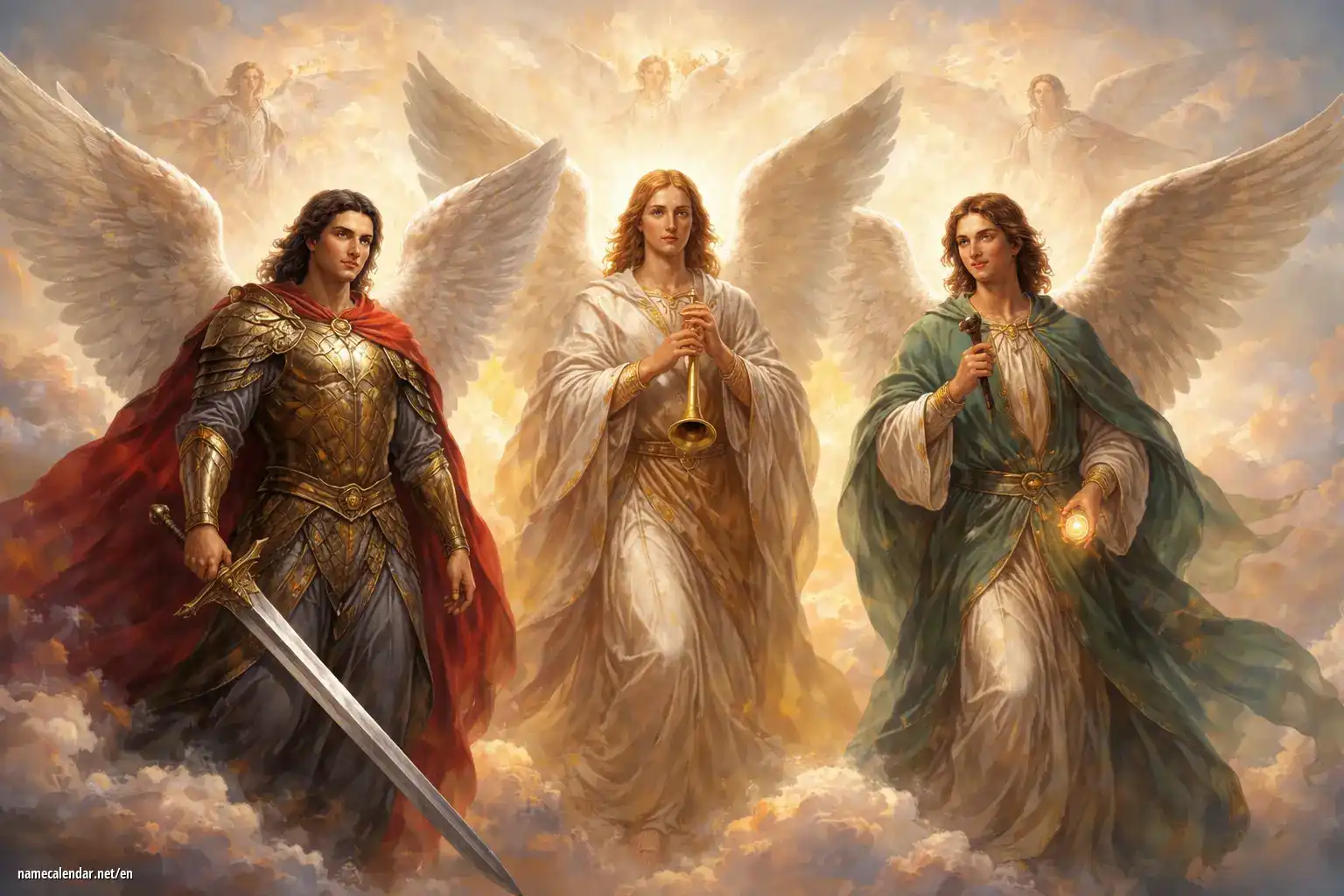
Why angel names attract people
Names connected with angels have a special place in naming traditions because they combine religious heritage, poetic meaning, and emotional warmth. For many families, such names suggest protection, guidance, purity, strength, healing, and hope. Even for people who do not choose them for religious reasons, angel names often feel timeless and noble. They are familiar in many languages, easy to recognize across cultures, and rich in symbolic meaning.Another reason for their lasting appeal is that angel names usually sound dignified without feeling distant. A name such as Michael can feel strong and classic. Gabriel may sound elegant and expressive. Raphael often feels artistic and gentle. These names carry stories, but they also work well in everyday life. That balance between sacred background and practical use has helped them survive for centuries.
In many traditions, angels are understood as messengers, guardians, servants of God, or spiritual beings who connect heaven and earth. Because of that role, their names came to symbolize communication, courage, mercy, wisdom, and protection. When such names were adopted as personal names, they brought those associations into family and community life.
What makes a name an angel name
Not every beautiful or spiritual name is an angel name. Usually the term refers to names that belong to angels named in sacred texts, religious tradition, liturgy, theology, or later devotional and literary sources. Some of these names are central and widely recognized, while others are known mainly in particular communities or texts.In the Abrahamic traditions, especially Judaism, Christianity, and Islam, a few angel names became especially famous. The best known are Michael, Gabriel, and Raphael. In some traditions, Uriel is also widely honored. Beyond these, there are names such as Ariel, Azrael, Jophiel, Zadkiel, Chamuel, and Haniel, though their status varies depending on the source and the tradition.
Many angel names have endings such as “-el” or “-iel.” In Hebrew-based naming patterns, this element is connected with God, which is one reason many angelic names sound related. This linguistic feature gives them a family resemblance. As a result, even people who do not know the etymology often sense that names like Gabriel, Uriel, Nathaniel, and Ezekiel belong to the same historical and spiritual world.
Names from scripture and names from tradition
Some angel names come directly from canonical sacred texts, while others became known through later writings, interpretation, prayer traditions, apocryphal books, folklore, or mystical literature. This difference matters because it affects how widely a name is accepted. A name like Michael has very broad recognition, while a name like Jophiel may be more familiar in devotional or esoteric contexts than in mainstream worship.For a names website, this distinction is important because it helps explain why some angel names are common baby names and others remain rare. People usually choose names that are both meaningful and culturally usable. That is why a few angel names entered everyday naming customs in many countries, while others stayed on the edges of tradition.
Michael: strength, protection, and leadership
Michael is one of the most famous angel names in the world and also one of the most successful as a personal name. Its traditional meaning is often explained as “Who is like God?” This rhetorical question expresses humility before divine greatness rather than competition. The name carries power, but it also carries reverence.In religious imagination, Michael is strongly linked with protection, spiritual battle, justice, and courage. He is often portrayed as a defender against evil, which gave the name a heroic reputation. That image helped Michael become popular not only in religious communities but also in wider society. Parents may choose it because it sounds stable, masculine, and internationally recognizable.
As a given name, Michael has many forms across languages, including Miguel, Michele, Mikhail, Mikael, Mikkel, and Mihail. This wide family of forms shows how deeply rooted the name is. Few angel names adapted so successfully into so many cultures. It works in formal settings, in literature, in politics, in art, and in ordinary daily life.
Because of its history, Michael often appeals to people seeking a classic name with spiritual dignity. It does not feel unusual or fragile. It feels enduring. That may be why it has remained strong for generations, often passing from grandfather to father to son.
Gabriel: message, announcement, and expression
Gabriel is another major angel name with deep roots and broad recognition. The name is often connected with ideas of divine strength or God’s power. In religious tradition, Gabriel is associated with important announcements and sacred messages. That gives the name a tone of clarity, revelation, and communication.Compared with Michael, which often feels martial and protective, Gabriel can feel more luminous, artistic, and expressive. It has a softer sound, yet it still carries weight. This combination has made it popular among families who want a name that feels both spiritual and refined. It is a name with presence, but not heaviness.
As a personal name, Gabriel has spread widely in Europe, the Americas, and many other regions. Related forms include Gavril, Gabriele, and Gabrijel. In some places it feels traditional; in others it feels stylish and modern. That flexibility is part of its appeal.
The symbolic character of Gabriel often attracts people who value intelligence, inspiration, eloquence, or creativity. Because the angel is linked with messages, the name can suggest a person who brings insight, speaks well, or carries meaningful news. For that reason, Gabriel often appears in literature and art as a name with emotional and spiritual depth.
Raphael: healing, care, and quiet beauty
Raphael is one of the most appealing angel names for people who love names with gentle strength. It is commonly associated with healing, restoration, and compassionate guidance. While Michael suggests defense and Gabriel suggests announcement, Raphael is often linked with comfort and wholeness.This meaning helped the name gain a warm and attractive reputation. Many people hear Raphael as elegant, cultured, and deeply humane. It sounds classical, but not cold. It sounds spiritual, but also artistic. The name became even more familiar because of historical figures and artistic traditions that gave it visibility far beyond theology.
Different language forms include Rafael, Raffaele, and Raphaël. These variations preserve the same essential identity while adapting to local pronunciation and style. The form Rafael, in particular, became popular in many countries as a strong yet graceful everyday name.
For parents and name lovers, Raphael offers a rich combination of beauty and meaning. It is suitable for someone imagined as thoughtful, kind, perceptive, and calm. Because healing is such a universal human hope, the name has emotional power even outside explicitly religious settings.
Uriel and other widely known angel names
Uriel is often understood as a name connected with light, fire, or divine illumination. In traditions where it is honored, Uriel is associated with wisdom, insight, and understanding. The name has a radiant quality that makes it very attractive in modern naming, especially for those who want something spiritual but less common than Michael or Gabriel.As a personal name, Uriel feels distinctive and memorable. It is short enough to be practical, yet unusual enough to stand out. Its sound is smooth and modern, even though its roots are ancient. Because of that, it appeals both to religious families and to people drawn to meaningful rare names.
Ariel is another name with angelic associations in some traditions, though it also has other meanings and uses. It became especially well known as a personal name because of literature, language diversity, and modern culture. Ariel may be used for boys or girls depending on the region, which gives it a broad modern life beyond its older spiritual background.
Azrael is also widely recognized, especially in discussions of angel names, though it is more complex and less commonly chosen as a personal name in many places. Because it is associated in some traditions with the angel of death, it carries a more solemn and serious tone. For some, that gives it depth and mystery; for others, it makes the name too weighty for everyday use.
The appeal of rarer angel names
Names like Uriel, Ariel, and Azrael attract people who want something less common but still rooted in tradition. These names often feel more poetic, mystical, or unconventional. They are chosen not only for meaning, but also for individuality. In modern naming culture, rarity can be a virtue when it is balanced by a recognizable history.Angel names in broader tradition and later sources
Beyond the best-known names, there is a larger world of angelic names found in later writings, mystical traditions, devotional texts, and popular belief. These include names such as Jophiel, Zadkiel, Chamuel, Haniel, Raziel, Sariel, and Remiel. These names are fascinating because they show how people kept expanding the imagined world of angels through interpretation and spiritual reflection.Jophiel is often linked with beauty, wisdom, or enlightened thought in later traditions. Zadkiel may be associated with mercy or benevolence. Chamuel is often connected with love or peaceful relationship in modern spiritual literature. Haniel is sometimes tied to grace, joy, or divine favor. Raziel may suggest hidden wisdom or mystery. These associations are not equally universal, but they helped the names gain a life of their own.
From a naming perspective, these rarer angel names often appeal to people who want a name that sounds spiritual and unusual. However, they usually remain niche choices. One reason is that their history is less familiar to the general public. Another is that pronunciation may feel uncertain in some languages. Even so, they can be striking and memorable for families who want a distinctive identity.
When discussing such names, it is helpful to note that tradition is layered. Some names are central and ancient in mainstream worship, while others belong more to symbolic, literary, or mystical worlds. That does not make them uninteresting. On the contrary, it gives them a special charm for readers who enjoy the intersection of language, faith, and imagination.
How angel names became personal names
The journey from sacred figure to personal name is one of the most interesting parts of name history. Angel names were not automatically used as everyday names from the beginning. Over time, communities adopted them because they admired the qualities attached to the angel, wanted a name with religious meaning, or followed naming customs influenced by scripture and saints.Michael, Gabriel, and Raphael became especially successful because they were meaningful, pronounceable, and adaptable. They also carried positive associations that families wanted to pass on. Protection, message, and healing are universal themes. As a result, these names moved naturally into family life and then into broader society.
Once angel names entered common use, they began developing local forms, nicknames, and cultural personalities. Michael could become a formal classic, a royal choice, or an everyday family name. Gabriel could feel literary or elegant. Rafael could feel artistic or warm. In this way, the names became more than references to angels. They became fully human names with lived histories.
This process also explains why some angel names spread widely and others did not. A name needs more than symbolic meaning to survive in common use. It must fit speech, community taste, and naming habits. That practical side of naming often decides whether a sacred name becomes a lasting favorite.
Use across languages and cultures
Angel names have remarkable international reach. Michael appears in English, while Miguel appears in Spanish and Portuguese settings, Mikael in Nordic usage, and Mikhail in Slavic traditions. Gabriel is similarly widespread, and Rafael is well established across several language families. This global adaptability has helped angel names remain fresh instead of becoming merely historical.The meanings behind famous angel names
One reason angel names remain popular is that their meanings are not vague or decorative. They often express strong spiritual ideas. Michael suggests reverence before divine greatness. Gabriel evokes strength and sacred communication. Raphael points toward healing. Uriel suggests light and understanding. These meanings give the names symbolic depth that many modern names do not have.Meaning matters especially on a names website because readers are often looking for more than sound. They want a story. A good name can offer identity, aspiration, memory, and emotional connection. Angel names do this especially well because they unite language and belief. Even when people do not know the full theological background, they often sense that these names carry weight.
Another interesting point is that angel names combine abstract ideas with vivid imagery. Healing, light, strength, mercy, and message are not only concepts. They are experiences people value in everyday life. A family choosing Gabriel may think of honesty and expression. A family choosing Raphael may think of tenderness and restoration. A family choosing Michael may think of courage and defense. This practical symbolism helps explain the long life of these names.
Angel names and gender in naming culture
Most of the best-known angel names entered modern naming culture as masculine names, especially Michael, Gabriel, Raphael, and Uriel. This pattern reflects long-standing religious and linguistic traditions. However, some angel-related names have developed broader gender usage in certain places.Ariel is the clearest example. Depending on language and culture, it may be used mainly for boys, mainly for girls, or for both. Its flexibility makes it appealing in contemporary naming, where many parents want names that feel fluid, modern, and versatile. Even when a name has ancient roots, modern usage can reshape its social identity.
Some families also choose feminine forms or related names inspired by the sound of angel names rather than by direct tradition. For example, names influenced by the same sound patterns may feel angelic even if they are not angel names in a strict sense. That shows how naming culture works: once a sound becomes associated with beauty and spirituality, it can inspire new choices beyond the original historical list.
For article readers, this is an important reminder that a name’s life does not end with its origin. Names continue to change as people adapt them to language, gender expectations, style, and modern taste.
Popular angel names and rare angel names
There is a major difference between angel names that became mainstream and those that remain uncommon. Michael, Gabriel, and Rafael or Raphael are widely accepted and easy to use in many countries. They feel established, trustworthy, and familiar. Because of that, they are often chosen by families who want a meaningful name without social risk.Rare names such as Uriel, Raziel, Zadkiel, Haniel, or Remiel offer something different. They are more individual, more unexpected, and sometimes more mysterious. Such names appeal to families who want a strong symbolic background but also a sense of uniqueness.
The choice between a popular and a rare angel name often depends on what the parents value most. A popular name offers familiarity and ease. A rare name offers distinctiveness and conversation value. Neither choice is better in itself. The best choice depends on the family’s language, culture, and vision for the child’s identity.
Why some names stay rare
A name may remain rare for several reasons. Its tradition may be less known. Its pronunciation may vary too much. Its meaning may be more solemn or complex. Or it may sound too unusual beside local naming habits. This is why a name like Azrael may be admired but still chosen less often than Gabriel. Cultural comfort matters just as much as symbolic richness.Angel names in literature, art, and imagination
Angel names have stayed alive not only through religion, but also through literature, painting, music, storytelling, and popular imagination. Artists and writers repeatedly return to names such as Gabriel, Michael, and Raphael because these names already carry atmosphere. They suggest a world larger than ordinary life.This cultural presence strengthens their appeal as personal names. A name that appears in sacred narrative, classical art, and modern culture gains layers of meaning. Raphael may feel artistic as well as spiritual. Gabriel may feel literary as well as biblical. Michael may feel historical as well as protective. The result is a rich naming experience that crosses religious, artistic, and social boundaries.
Some rarer names also thrive in imaginative settings. Uriel, Raziel, and Azrael often appear in fantasy, speculative fiction, and symbolic writing because they sound ancient and powerful. This can make them newly attractive to modern audiences who discover them through books, film, or digital culture rather than through formal religious teaching.
Choosing an angel-inspired name today
When people choose an angel name today, they often balance several things at once: meaning, tradition, sound, uniqueness, and usability. A family may love the protection associated with Michael, the expressive quality of Gabriel, the healing symbolism of Raphael, or the luminous mystery of Uriel. Each choice creates a different emotional impression.It is also useful to think about pronunciation, spelling, and cultural fit. A name that feels beautiful on paper should also work well in daily speech. That is one reason classic angel names continue to do well. They are rich in meaning, but they are also practical. Rare names can be wonderful too, especially when the family is comfortable explaining them and using them confidently.
For many readers, angel names are attractive because they feel hopeful. They suggest that a name can carry blessing, not only identity. Whether chosen for faith, family tradition, symbolism, or sound, these names often feel uplifting. That emotional light is part of their enduring power.
Questions worth asking before choosing
Before choosing an angel-inspired name, it helps to ask a few simple questions. Is the meaning important to you? Do you prefer a classic or a rare form? Does the name work well in your language? Do you want a name with strong religious recognition, such as Michael, or something more distinctive, such as Uriel or Raziel? The answers can guide the final choice.The lasting charm of angel names
Angel names have lasted because they offer more than beauty. They offer story, memory, symbolism, and continuity. A name like Michael connects strength with humility. Gabriel joins power with message. Raphael carries healing and grace. Uriel shines with light and insight. Even rarer names such as Haniel or Zadkiel show how rich the wider angelic naming tradition can be.For a names website, these names are especially rewarding because each one opens a doorway into language, faith, and culture. They are not merely labels. They are miniature histories. Some became worldwide classics, others remained rare treasures, but all of them reveal humanity’s long fascination with beings imagined as protectors, messengers, and companions of the sacred.
That is why the names of angels continue to inspire. They speak to people who want names with depth, and they remind us that naming has always been about more than sound. It is also about meaning, hope, and the qualities people wish to carry into life.