Medieval Names and Their Hidden Meanings
Medieval names reflect the history, faith, and culture of Europe between the 5th and 15th centuries. Influenced by religion, warfare, royalty, and local traditions, names such as
William,
Matilda, and
Henry became lasting legacies that still shape modern naming traditions.
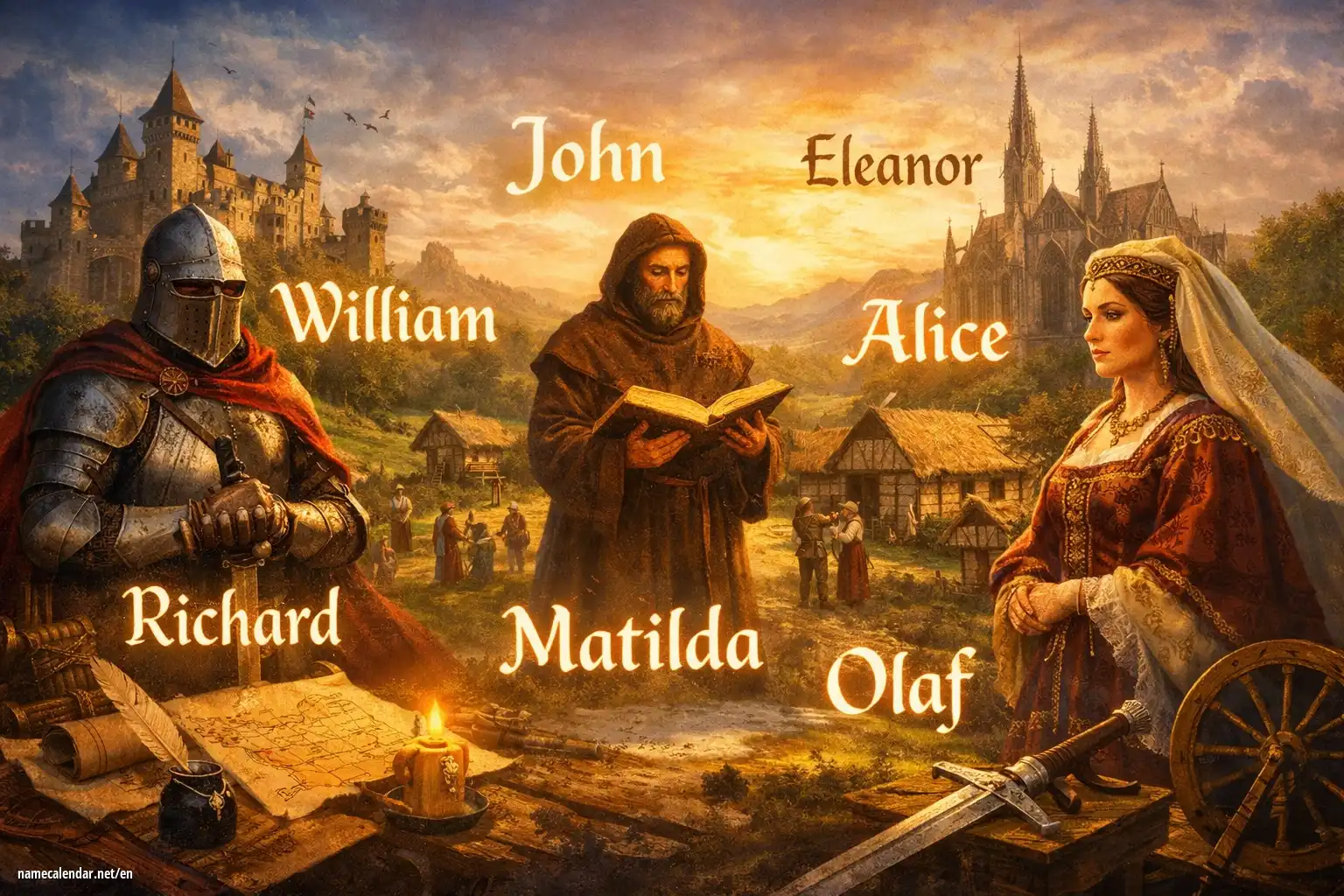
Origins of Medieval Names
Medieval names emerged from a blend of Germanic, Latin, Norse, and Celtic traditions. After the fall of the Roman Empire, Germanic tribes introduced powerful compound names such as
Bernard and
Frederick. These names often combined elements meaning strength, bravery, or protection.
Christianity also reshaped naming patterns. Biblical names like
John,
Mary,
Peter, and
Thomas spread widely across Europe. Latin versions were adapted into local languages, creating forms such as
Jean,
Giovanni, and
Juan.
Germanic Influence on Medieval Names
Compound Structure and Meaning
Germanic medieval names often consisted of two meaningful elements. For example,
William derives from “wil” meaning will or desire and “helm” meaning helmet or protection. Similarly,
Robert combines fame and bright.
Warrior Culture and Nobility
Names like
Richard,
Harold, and
Edmund reflected martial values. Kings such as
Henry and
Edward popularized these names among the nobility and later the common people.
Religious and Biblical Medieval Names
The spread of Christianity during the Middle Ages led to the dominance of saints’ names. Children were often named after patron saints for protection. Names such as
Christopher,
Catherine, and
Margaret became common across regions.
Monasteries and churches recorded baptisms, strengthening standardized name forms.
Elizabeth, derived from Hebrew origins, gained popularity among queens and noblewomen.
Royal and Noble Medieval Names
Royal families heavily influenced naming trends. When a king named
Charles or
Louis ruled France, those names surged in popularity. In England,
Matilda,
Eleanor, and
Anne became associated with power and prestige.
Dynastic repetition strengthened legitimacy. Multiple rulers named
Henry or
Philip reinforced tradition and continuity.
Medieval Female Names and Their Roles
Women’s medieval names often reflected virtue, faith, and beauty. Names such as
Isabella,
Adelaide, and
Beatrice symbolized nobility and grace.
Some names had strong Germanic roots, like
Gertrude and
Hildegard, reflecting strength and battle symbolism. Others, like
Alice and
Emma, were shorter forms that became widely loved.
Occupational and Descriptive Names
By the late medieval period, surnames developed from occupations and personal traits. Although first names dominated earlier, individuals became known as
John Baker or
Thomas Smith. These eventually evolved into hereditary surnames.
Descriptive additions helped distinguish between individuals sharing the same given name. Physical traits or places of origin often supplemented popular names like
Robert or
William.
Regional Variations of Medieval Names
Across Europe, the same root name developed into multiple forms.
John appeared as
Johann in Germany,
Ivan in Slavic regions, and
Sean in Ireland.
Scandinavian areas favored Norse names such as
Olaf and
Erik, while Celtic regions preserved names like
Brian and
Fiona. These variations highlight linguistic diversity during the Middle Ages.
Medieval Naming Traditions and Customs
In many regions, the first son was named after the paternal grandfather, and the first daughter after the maternal grandmother. This tradition preserved family heritage. Repetition of names like
Thomas and
Margaret within families was common.
Nicknames and diminutives also emerged.
Will from
William and
Meg from
Margaret became familiar forms still used today.
Legacy of Medieval Names Today
Many medieval names remain popular in modern times.
Henry,
Emma,
Isabella, and
William consistently rank high in baby name charts. Their timeless meanings and royal associations make them enduring choices.
Understanding medieval names provides insight into European history, language evolution, and cultural identity. These names connect the present with centuries of tradition.
