
Lost Given Names Through the Centuries
Some personal names seem timeless, yet many others slowly vanish. A name can disappear because a language changes, a religion loses influence, a dynasty falls, or a sound simply starts to feel old-fashioned. In many cases, forgotten names were once ordinary and respected. Their decline tells a larger story about migration, power, taste, and memory. Looking at lost names helps us understand not only naming trends, but also the societies that once gave those names life.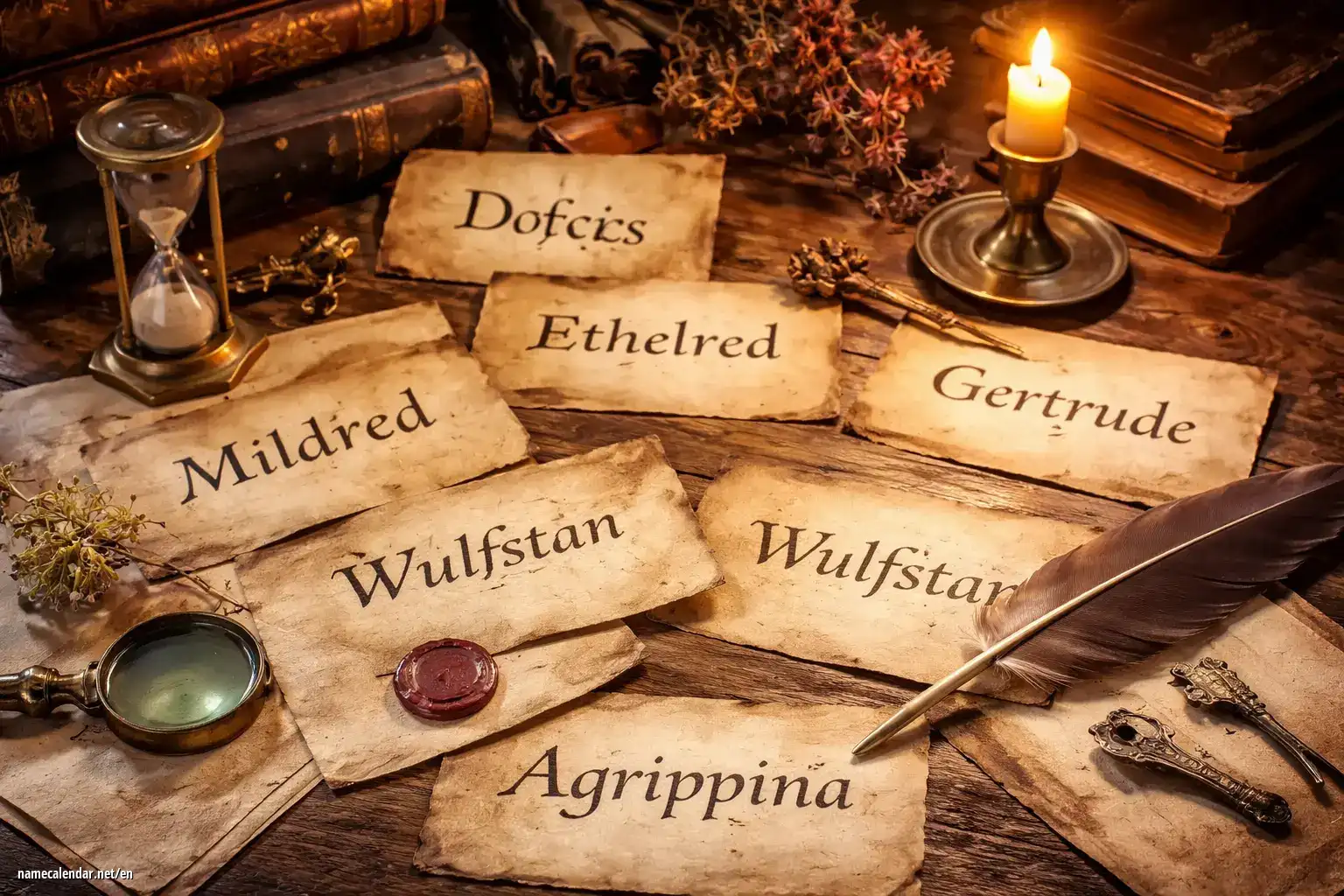
Why names disappear at all
Given names do not survive automatically. They remain in use only when families continue passing them on and when communities still recognize them as meaningful, beautiful, or socially acceptable. A name may fall because it becomes tied to an outdated class, a defeated ruler, a vanished saint cult, or a linguistic form that no longer fits modern pronunciation. Unlike family names, given names depend heavily on living fashion. They need renewal in each generation.Names also disappear unevenly. Some vanish quickly after a political or religious break, while others fade over centuries. A few remain visible in literature or archives but are no longer given to children. Others survive in altered form. For example, one old name may vanish while a shorter, softer, or translated version continues. In this way, disappearance is not always total. Sometimes a name dies openly; sometimes it hides inside a newer form.
When religion changes the naming pool
Pagan names after Christianization
One of the strongest reasons names disappeared was religious change. When Christian naming became dominant in much of Europe, many older pagan names lost prestige. Parents increasingly preferred biblical names, saint names, and names connected to church calendars. As a result, older local names could seem rustic, old-fashioned, or spiritually unsuitable. A name such as Wulfstan or Leofwine once fit a pre-modern Germanic world, but later generations often chose names with clearer Christian associations.This shift did not happen overnight. In some regions, pagan and Christian traditions mixed for a long time. Families might keep an old native naming style while slowly introducing names like John, Peter, Anna, or Maria. Over time, however, the religiously approved set usually became more stable and more socially useful. Priests recorded those names, rulers bore them, and communities heard them constantly. Many older names then retreated into documents and legends.
Local saints and forgotten devotions
Religious influence could also work in the opposite direction. Some names were once common because they belonged to local saints or regional cult figures. When devotional patterns changed, those names could weaken. A community might once favor a name connected with a monastery, shrine, or feast day, but after reform, war, or secularization, the same name might lose everyday visibility. In that sense, even religious names could disappear when the network supporting them collapsed.Language change can quietly erase a name
Sound shifts and simplification
Some names disappeared not because people rejected them, but because the language around them changed. Long compounds, heavy consonant clusters, and old inflectional patterns often became less comfortable over time. Names that once sounded noble could later seem difficult or awkward. Old English names such as Eadgyth, Ceolwulf, and Aelfweard belonged to a rich naming tradition, yet most of these forms did not remain active in modern English speech.In many cases, language favored shorter and more transparent names. A complex older form might survive only after reshaping. A name like Eadgyth eventually became better known through the later form Edith. What disappeared, then, was not always the identity of the name, but its old shape. This process happened in many languages. Phonetic change, spelling reform, and contact with other cultures all encouraged simpler or more internationally familiar forms.
Translation and replacement
Names also vanished when one language replaced another in administration, religion, or prestige culture. A local name might be translated, adapted, or exchanged for a more dominant equivalent. In multilingual regions, this could happen repeatedly. A native form might be pushed aside by a Latin, German, Slavic, French, or English version, depending on the period. Eventually the original form could become rare, even though its meaning or root still lived on under a different name.Political power decides which names survive
Royal favor and royal collapse
Rulers and dynasties strongly influence naming habits. When a royal house becomes admired, its names spread. When that house falls or becomes hated, the same names may decline. A once-prestigious name can become unusable if it reminds people of failure, tyranny, civil war, or foreign domination. This is why many names rise and fall together with political memory rather than with sound alone.Consider how medieval Europe circulated names through ruling families. Names such as Matilda, Eleanor, Philip, and Louis remained visible partly because powerful families kept renewing them. Other names were less lucky. Anglo-Saxon royal names such as Ethelred, Edwig, and Edgar suffered after the Norman Conquest, when French-influenced naming gained prestige in England. Not every old English name vanished, but many never fully recovered.
Revolutions and ideological breaks
Revolutionary periods can narrow the acceptable name pool. A name associated with an aristocratic class, an old empire, or a fallen regime may suddenly feel burdened. Families seeking safety or social mobility often turn toward more neutral names. In such moments, a name does not merely become unfashionable. It becomes historically heavy. Parents usually avoid giving children names that might mark them as backward, political, or socially exposed.Names lost through conquest and cultural pressure
Many names disappeared because the communities that carried them came under strong outside pressure. Conquest, forced assimilation, colonization, and centralized schooling often reduced local naming traditions. Officials may have preferred names from the dominant language. Priests, teachers, and clerks sometimes simplified or replaced names they did not understand. Over generations, families adjusted to avoid difficulty, ridicule, or exclusion.Indigenous naming systems in many parts of the world suffered this kind of loss. Traditional names could be replaced by missionary names, colonial names, or legally required names. Even where old names survived in oral tradition, they were often underrepresented in records. That means disappearance can be partly archival. A name may continue in family memory while vanishing from official documents. When people later look back, it can seem as if the name died completely, even though it was only pushed out of public view.
This kind of disappearance is especially important because it is not the result of innocent fashion alone. It often reflects unequal power. A forgotten name may point to a forgotten community, a suppressed language, or a broken line of inheritance.
Names that felt too old, too heavy, or too strange
The burden of style
Sometimes a name disappears simply because taste changes. Every era develops ideas about what sounds elegant, modern, serious, soft, strong, refined, or ordinary. Names with dense sounds or old heroic meanings may begin to feel theatrical. Others may seem too tied to grandparents and great-grandparents. Once that impression settles in, a name may fall for several generations even without any dramatic historical event behind it.For example, names such as Mildred, Gertrude, Bertha, and Ebenezer were once familiar in the English-speaking world. Later they came to sound heavy, severe, or sharply old-fashioned to many ears. Their decline shows how strongly sound symbolism and social imagination shape naming. Parents usually choose not only a name’s meaning, but also its emotional atmosphere.
Association with one fictional or historical figure
A name can also be damaged by a very strong association. If one ruler, villain, scandal, or caricature dominates the public memory of a name, parents may avoid it. This does not always erase a name forever, but it can freeze it in a narrow role. Some names remain recognizable while almost disappearing in real birth records because they feel too loaded to use on an actual child.Old European names that largely faded
From Anglo-Saxon England
Pre-Conquest England had a rich repertoire of native names built from meaningful elements such as wealth, battle, counsel, wolf, elf, and peace. Names like Leofric, Aelfgifu, Aethelstan, Wulfric, and Godgifu belonged to a well-developed system. After the Norman Conquest, however, many of these names fell under pressure from French, biblical, and continental preferences. Later English speakers preserved only a small part of that older pool.A few native names adapted and survived. Edward, Edmund, and Alfred remained possible because they were supported by royal memory or easier phonetic development. But many related names did not. Today, forms such as Aelfweard or Eadwulf feel more like museum pieces than living names. Their disappearance reveals how sharply conquest can redirect naming culture.
From Germanic and Nordic traditions
Elsewhere in Europe, many old compound names also shrank in use. Older Germanic naming loved combinations with elements meaning spear, fame, protection, raven, battle, and rule. Some endured in reshaped form, but others faded as naming became more standardized. Names such as Kunigunde, Walburga, Sigebald, and Theodelind once fit historical societies very well, yet later generations often preferred shorter or more international names.In Nordic areas, saga-era names have sometimes survived better than elsewhere because of strong literary memory, but even there many forms disappeared or remained rare for long periods. A name can survive in epics and national heritage while still vanishing from cradles.
Classical names that slipped out of daily life
Ancient Greece and Rome produced thousands of personal names, but only a fraction remained active in later Europe. Some names disappeared because their pagan context no longer suited Christian society. Others were simply too closely tied to the classical world and were remembered more as historical labels than as family choices. A Roman senator’s name could stay famous in books while becoming unthinkable for ordinary use.Names such as Agrippina, Tiberius, Calpurnia, Germanicus, and Cassiopeia remain recognizable, yet most of them did not enter long-term popular naming in the same way that Julia, Marcus, or Diana did. This difference shows that familiarity is not enough. A name needs social portability. If it sounds too theatrical, too elite, too antique, or too bound to one famous figure, it may be admired without being reused.
Women names and men names did not disappear in the same way
Faster change in fashion-sensitive naming
In many societies, female naming has changed more quickly than male naming, although this pattern is not universal. Men names are often conserved through inheritance, dynastic use, and family tradition. Women names, by contrast, have sometimes been more open to fashion, literature, and changing ideals of femininity. That means certain female names can rise rapidly and then vanish just as quickly.Names such as Ethelinda, Dorcas, Hortense, and Blanchefleur each belonged to particular historical tastes. When those tastes faded, the names often faded with them. Men names could disappear too, but they were sometimes protected by repetition from father to son, by the prestige of rulers, or by stronger pressure to maintain family continuity through naming.
Changing ideals of respectability
Another reason for uneven disappearance lies in respectability. A name may once have signaled virtue, piety, nobility, or refinement, then later seem stiff or decorative. Parents respond quickly to those impressions. A name associated with a grandmother’s world may become too old to use, then much later become charming again. This cycle is one reason some names disappear completely while others only sleep.Names can die in speech but live in records
Historical sources create an illusion of clarity. If a name appears often in medieval records and then rarely in modern birth lists, we say it disappeared. That is usually true, but the path is often complicated. Some names continued in rural districts, minority communities, or isolated families long after they vanished from major cities. Others survived as second names, confirmation names, or literary references rather than everyday call names.There is also the problem of spelling. One old name may appear under many forms, making it look rarer or more fragmented than it was. A clerical spelling could mask local pronunciation, and later historians may miss the connection between two variants. This matters because some supposedly vanished names were not fully lost. They were scattered, altered, and weakened until they no longer looked like a continuous tradition.
When old names return after centuries
National revival and romantic history
Not every disappeared name stays gone. In periods of national revival, literary romanticism, or renewed interest in folklore, parents often rediscover old naming layers. Scholars publish historical texts, poets celebrate forgotten heroes, and families begin to see old names as distinctive rather than outdated. A name that once sounded obsolete can return as bold, rooted, or elegant.This has happened in many countries. Medieval, mythological, and regional names have re-entered use after long dormancy. Yet revival rarely restores the entire older system. Usually only a select group returns, especially those that are easier to pronounce, visually attractive, or ideologically useful. In other words, revival is creative. Modern society does not reopen the past exactly as it was. It chooses from it.
Revived but transformed
Even when an old name returns, it often comes back with a different meaning. An earlier generation may have used it as an ordinary community name, while modern parents use it because it feels rare and historical. The same form can therefore belong to two very different naming worlds. A revived name is not truly the same social object as it once was. It carries a new tone, a new audience, and often a new purpose.Examples of names that nearly vanished
Names shaped by old English and medieval use
Ethelred once belonged to royal history, but its sound and strong medieval associations prevented broad survival in modern naming. Aelfgifu and Aethelflad carry immense historical interest, yet their older spellings and phonetic structure make them feel remote to many modern speakers. Leofwine and Wulfstan illustrate how richly meaningful early names can still disappear when the cultural system that supported them collapses.Names affected by changing taste
Gertrude, Bertha, and Mildred were once respectable and common, but later generations often heard them as heavy and old. Ebenezer suffered from a narrow cultural image despite its deep biblical and religious history. Dorcas declined in many places because its sound and associations changed in the public ear, even though it has a long Christian background.Names remembered more than used
Agrippina, Tiberius, and Germanicus remain memorable through history, but they mostly live in education, literature, and imagination rather than in playgrounds and school registers. These names show that survival in cultural memory does not guarantee survival in actual naming practice.What forgotten names teach us today
Disappeared names remind us that naming is never purely personal. Every given name belongs to a social world of religion, law, language, class, family structure, education, and fashion. When a name vanishes, it often marks a wider historical shift. It can show the triumph of a new culture, the fading of a dialect, the impact of migration, or the silent pressure of institutions.They also challenge the idea that naming trends are shallow. Choosing or avoiding a name is often an instinctive act, but the reasons behind that instinct are deeply historical. Parents may think they are responding only to beauty or modernity, yet their taste has been shaped by centuries of memory and forgetting.
For people interested in names, lost names are especially valuable because they widen the imagination. They reveal layers of naming culture that modern lists rarely show. They also open the door to rediscovery. A forgotten name can seem strange at first, then rich, then beautiful. Many names disappeared not because they lacked value, but because history moved around them.