
Names Inspired by Famous Historical Couples
Some names feel timeless because they carry a story larger than one person. Famous couples in history have given many names an extra layer of romance, power, tragedy, brilliance, or elegance. This article explores first names linked to memorable historical pairs, showing how each name gained cultural weight through partnership, reputation, and legacy. Rather than offering a simple list, it looks at why names such as Cleopatra, Josephine, Victoria, or Pierre still attract attention and what kind of image they create today.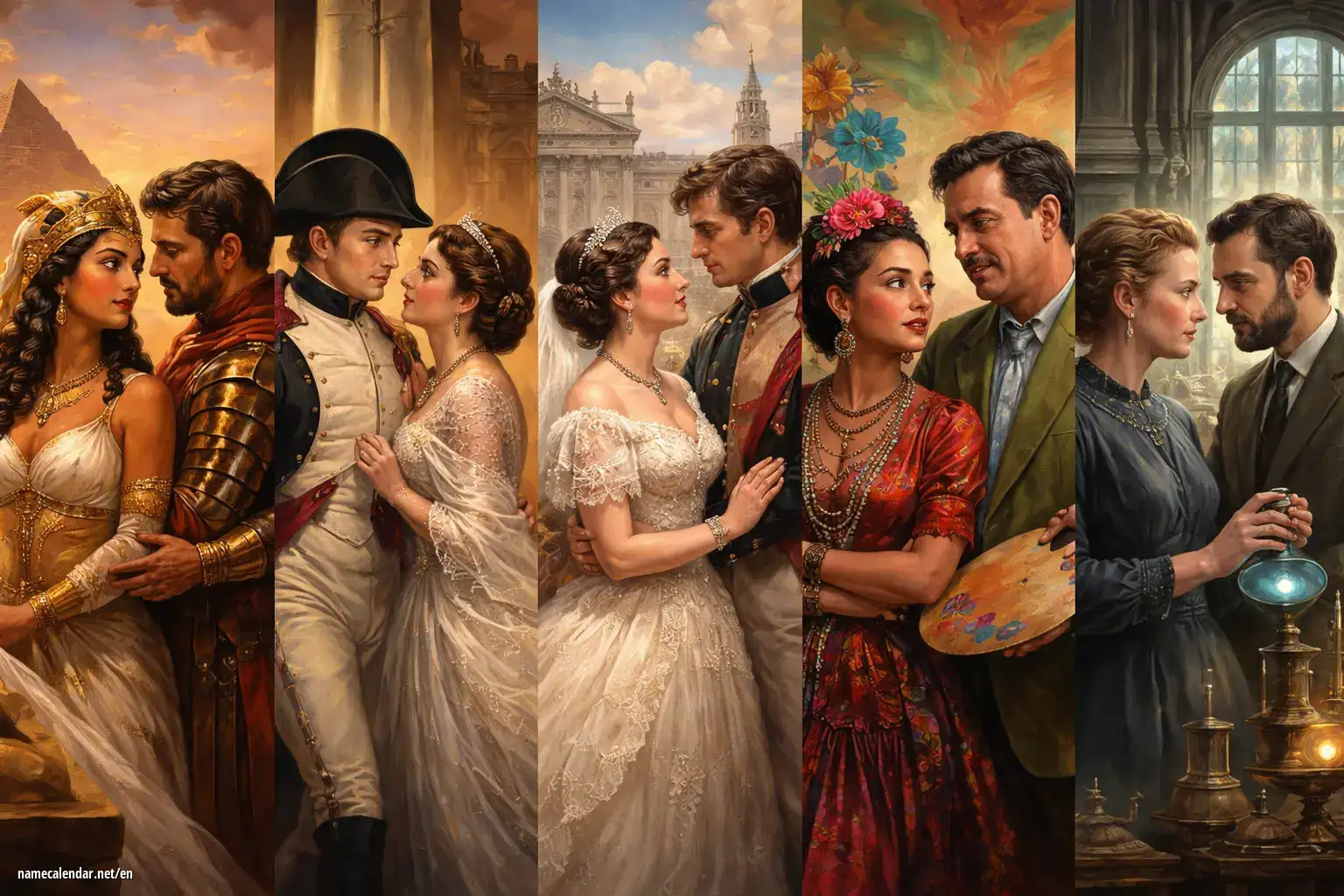
Why Historical Couples Matter in Naming
Names do not travel through history alone. They collect meaning through people, families, rulers, artists, and relationships. When two individuals become famous together, their names begin to echo each other in cultural memory. A name like Victoria may already suggest strength, but when paired with Albert, it also recalls loyalty, family life, empire, and nineteenth-century refinement. In the same way, Pierre and Marie together suggest intellect and devotion to discovery, while Napoleon and Josephine call up ambition, glamour, and emotional complexity.For readers of a names website, such pairs are useful because they show how public memory shapes private taste. Some people are drawn to names with regal prestige. Others prefer names touched by art, science, or dramatic love stories. Famous couples in history provide all of these possibilities. Their names can feel traditional, distinctive, romantic, learned, or bold, depending on the figures attached to them and the way their story has been retold over time.
Cleopatra and Antony
The power and drama of Cleopatra
Cleopatra is one of the most striking female names in history. It comes from ancient Greek roots and carries an image of brilliance, charisma, political intelligence, and irresistible presence. Because of Queen Cleopatra VII of Egypt, the name has become almost mythical. It feels theatrical and commanding, never quiet or ordinary. For modern readers, Cleopatra is less a casual everyday choice and more a statement name, one that suggests confidence, glamour, and historical depth.The appeal of Cleopatra also lies in its richness of sound. The name is long, musical, and unmistakable. It offers friendly short forms in everyday speech, yet its full form keeps an aura of grandeur. Anyone interested in names that stand apart from common trends may find Cleopatra fascinating because it combines femininity with authority in a rare way.
The legacy of Antony
Antony, associated with Mark Antony, offers a more restrained but equally historic option. The name sounds classical, noble, and masculine without being harsh. Compared with some ancient Roman names, Antony remains accessible to modern ears. It has long been used in different forms across Europe, which helps it feel rooted in tradition rather than distant from everyday life.Together, Cleopatra and Antony represent one of history’s best-known love stories, filled with politics, passion, and tragedy. As name inspiration, they show two very different styles: one lavish and unforgettable, the other classic and steady. Readers looking for names with drama and historical romance may be especially drawn to this pair.
Napoleon and Josephine
Napoleon as an unmistakable historical name
Napoleon is a name that cannot be separated from force of character. It is tied to military genius, ambition, empire, and intense personal mythology. Because of that, Napoleon is not a subtle name choice. It feels weighty, bold, and unusual, carrying a powerful historical shadow. For many readers, it is more interesting as a cultural reference than as a practical modern first name, yet it remains an important example of how a single famous figure can define a name almost completely.The elegance of Josephine
Josephine has enjoyed a much gentler afterlife. Linked to Empress Joséphine, the name suggests elegance, grace, and refinement. It belongs to the wider family of names derived from Joseph, but Josephine has developed its own atmosphere: romantic, polished, and slightly aristocratic. It feels vintage without seeming dusty, and it works well in many languages and cultural settings.What makes Josephine especially attractive is its balance between familiarity and distinction. Many people recognize it instantly, yet it is not overused in the same way as shorter classic names. It also offers versatile nicknames, which makes it practical as well as beautiful. Beside the sharp force of Napoleon, Josephine looks even softer, showing how famous couples can preserve two very different naming images in public memory.
Abelard and Heloise
An intellectual and emotional pairing
Abelard and Heloise belong to one of the most famous love stories of the medieval world. Their names carry a sense of scholarship, passion, and sorrow. Because their letters survived, they became more than historical figures: they turned into symbols of intellectual intimacy. For name lovers, this pair offers something different from royal or imperial glamour. It suggests minds meeting as strongly as hearts.The rare dignity of Abelard
Abelard is rare, learned, and unmistakably old-world. It has a serious sound and is unlikely to blend into modern naming fashions. Readers interested in uncommon male names with medieval depth may find Abelard intriguing, though it is probably better suited to those who appreciate historical rarity over convenience. The name projects thoughtfulness, scholarship, and individuality.The lyrical beauty of Heloise
Heloise, by contrast, has grown into a more wearable name for modern ears. It sounds refined, intelligent, and lyrical. The name often appeals to people who like vintage French-influenced names but want something less expected than many revival favorites. Through its link with Héloïse, the name carries romance, education, emotional intensity, and literary grace.As a pair, Abelard and Heloise show that famous couple names do not always need crowns or battlefields to matter. Sometimes the lasting power comes from letters, ideas, and the emotional force of a remembered bond.
Shah Jahan and Mumtaz
Names shaped by devotion and memory
The story of Shah Jahan and Mumtaz is remembered above all through the Taj Mahal, a monument to love and mourning. Their names carry majesty, beauty, and cultural richness. While Shah is also used as a title in history, it has a concise, strong sound as a given name element and evokes royalty, dignity, and authority.Mumtaz has an especially graceful image. It is elegant, distinctive, and deeply associated with admiration and treasured memory. For many readers, Mumtaz feels both poetic and dignified, a name with softness but also prestige. Its historical association gives it emotional resonance, because the story attached to it is one of love that outlived death in public memory.
This pair demonstrates how historical couple names can carry architectural and artistic legacy as well as personal meaning. Through Shah and Mumtaz, names become linked not only to individuals but to one of the world’s most famous symbols of devotion.
Victoria and Albert
Victoria as a timeless regal classic
Victoria is one of the clearest examples of a name strengthened by historical association. It already means victory, which gives it confidence and brightness, but Queen Victoria made it a symbol of monarchy, endurance, family image, and cultural influence. The name feels grand without being inaccessible. It has remained usable across generations because it combines strength, femininity, and historical prestige so effectively.Modern readers often appreciate Victoria because it is formal yet familiar. It works in professional settings, sounds polished, and can be shortened in several ways. This flexibility helps explain why it has lasted so well. The name can feel royal, elegant, or simply classic depending on the context.
The steady refinement of Albert
Albert has a quieter style, but its connection to Prince Albert gives it dignity and depth. The name suggests intelligence, seriousness, and reliability. It belongs to the category of traditional male names that can feel old-fashioned in one decade and freshly solid in another. Because it is so strongly tied to a respected historical consort, Albert often carries an image of loyalty and thoughtful influence rather than flamboyant fame.Together, Victoria and Albert offer a classic naming model: stately, respectable, and lasting. Readers who admire names with royal history but moderate usability may find this pair especially attractive.
Pierre and Marie Curie
Names linked with science and partnership
Not all famous historical couples are remembered for romance alone. Pierre and Marie Curie are admired for intellectual partnership, scientific dedication, and shared achievement. Their names have become associated with brilliance, discipline, and purpose. For many people, this makes them especially appealing as name references, because they suggest substance as well as legacy.The thoughtful character of Pierre
Pierre is the French form of Peter, and it carries both familiarity and continental refinement. It sounds cultured and understated. Compared with more flamboyant historic names, Pierre projects calm intelligence. It works well for readers who admire European classic names and want something recognizable but less common in English-language settings.The enduring simplicity of Marie
Marie has enormous historical range, but its association with Marie Curie gives it a special intellectual prestige. The name itself is simple, elegant, and widely adaptable. What changes its emotional texture is the person attached to it. Through Marie Curie, the name suggests discipline, resilience, courage, and groundbreaking achievement.As a pair, Pierre and Marie show how names can gain appeal through shared work and mutual respect. Their legacy is not only emotional but also academic and cultural, which gives these names a particularly admirable image.
Frida and Diego
Bold creative names with artistic intensity
Frida and Diego are names saturated with artistic energy because of Frida Kahlo and Diego Rivera. Their relationship was turbulent, passionate, and unforgettable, and their individual reputations as artists remain powerful. For name lovers, this pair offers color, individuality, and creative force rather than conventional romance.The rising strength of Frida
Frida has become increasingly appealing in modern naming discussions because it is short, strong, and culturally rich. It feels distinctive without being difficult. The name carries an image of originality, emotional honesty, and artistic courage. It also benefits from a clean sound and international usability, which help it travel well across languages and cultures.The warmth and confidence of Diego
Diego is lively, warm, and confident. It has long-standing use in the Spanish-speaking world and has become familiar far beyond it. Because of Diego Rivera, the name also carries a certain mural-like grandeur, tied to public art, history, and bold expression. Readers looking for a male name that feels energetic and cultured may see strong appeal in Diego.Together, Frida and Diego show how a couple’s legacy can make names feel vivid and modern even when the historical figures belong to the past. Their names remain fresh because their artistic influence remains visible.
John and Abigail Adams
Steady names shaped by letters, politics, and respect
John and Abigail Adams represent a different type of famous couple legacy. Their names are not exotic or rare, but their correspondence and shared role in early American political life give them unusual moral and intellectual weight. For name lovers, this pair shows that common names can still feel extraordinary when attached to memorable character and partnership.The lasting simplicity of John
John is one of the most enduring male names in history. Its strength lies in its clarity and stability. Because so many important figures have borne it, the name never belongs to one story alone, yet John Adams adds associations of statecraft, discipline, and founding-era seriousness. The result is a name that feels trustworthy and deeply established.The intelligence and warmth of Abigail
Abigail has a softer sound, but it also suggests intelligence, capability, and moral clarity because of Abigail Adams. The name blends biblical roots with historical respectability. It has remained popular in part because it feels classic and intelligent while still sounding warm and approachable. Through Abigail Adams, the name gains a sharper image of wit, loyalty, and practical wisdom.As a pair, John and Abigail appeal to readers who prefer names grounded in history but highly usable in contemporary life. They prove that distinction does not always require rarity.
Louis and Marie Antoinette
Names of courtly splendor and historical drama
Louis and Marie Antoinette bring to mind Versailles, ceremony, luxury, and revolution. These names are deeply rooted in European naming history, but their public image has been sharpened by one of the most dramatic royal stories in modern memory. They show how names can carry both elegance and cautionary grandeur.The traditional strength of Louis
Louis is polished, historical, and consistently stylish. It has been borne by many kings, which gives it authority, but it also has an artistic and literary side because of its wide use in French culture. The name feels more wearable today than some overtly imperial names because it is smooth, concise, and long established internationally.Marie beyond simplicity
Marie may appear simple at first glance, yet history has made it one of the most layered female names. In the case of Marie Antoinette, it carries associations of refinement, visibility, and symbolic femininity under pressure. The same name can feel gentle in one context and regal in another. That flexibility is one reason Marie has survived for centuries.This pair may attract readers who enjoy names with French elegance and strong historical atmosphere. Even when the story behind the couple is controversial or tragic, the names themselves can remain compelling and beautiful.
Elizabeth and Robert Browning
Literary names shaped by devotion and art
Elizabeth Barrett Browning and Robert Browning are remembered as a great literary couple whose marriage became part of English cultural history. Their names are already classic, but their partnership adds poetry, intellect, and emotional depth. This pair is useful for readers who love names connected to literature rather than monarchy or conquest.The wide-ranging grace of Elizabeth
Elizabeth is one of the most versatile female names in history. It can feel biblical, royal, literary, or modern depending on the bearer. Through Elizabeth Barrett Browning, the name gains artistic seriousness and romantic dignity. It remains appealing because it offers tradition, flexibility, and a long record of distinguished use.The dependable classic Robert
Robert is similarly durable. It is familiar across generations, but the Browning association lends it intellectual warmth and poetic credibility. The name feels grounded and substantial. For modern use, Robert may appear less fashionable than some newer trends, yet its historic strength and clarity continue to make it relevant.Together, Elizabeth and Robert remind readers that famous couple names can gain power from art and letters just as easily as from crowns or battles.
Eleanor and Franklin
Public service, endurance, and modern historical presence
Eleanor and Franklin Roosevelt form one of the most influential couples of the twentieth century. Their names carry political history, public service, resilience, and reform. For readers interested in names connected to leadership and civic presence, this pair offers especially rich material.The revival strength of Eleanor
Eleanor has seen strong modern appreciation because it feels both noble and intelligent. The name has medieval roots, yet it suits contemporary taste extremely well. Through Eleanor Roosevelt, it gained additional meaning connected to independence, moral courage, and social engagement. The result is a name that sounds elegant while carrying substance.The distinctive solidity of Franklin
Franklin is more formal than many current favorites, but that is part of its appeal. It sounds serious, established, and thoughtful. While the name also recalls other historical figures, Franklin Roosevelt gives it an image of leadership under pressure and broad public recognition. For readers who like surnamelike first names with strong history, Franklin can be a compelling option.As a pair, Eleanor and Franklin show how modern historical couples can shape naming taste through action, ideals, and public responsibility rather than romance alone.
What These Couple Names Have in Common
Looking across these famous pairs, a pattern emerges. The most memorable historical couple names usually combine one or more of the following qualities: strong storytelling, public recognition, emotional resonance, and a clear image. Cleopatra feels dramatic. Josephine feels elegant. Victoria feels regal. Frida feels artistic. Abigail feels intelligent and steady. A name becomes more attractive when people instantly sense a story behind it.Another shared quality is contrast. In many couples, one name is grander or rarer while the other is steadier and more familiar. Cleopatra contrasts with Antony. Napoleon contrasts with Josephine. Eleanor contrasts with Franklin. This makes historical pairs especially useful for readers who enjoy comparing naming styles, because they show how different sounds and images can still create a memorable balance.
How to Use Historical Couple Names as Inspiration
For a names website audience, the best way to use historical couple names is not to copy them automatically but to notice what attracts you. Some readers may admire the grandeur of Victoria but prefer a simpler companion name. Others may love the artistic energy of Frida yet want a name from a different cultural setting. The value of these couples lies in the atmosphere they create. They help readers identify whether they are drawn to names that feel regal, romantic, intellectual, unconventional, or warmly classic.It is also worth considering usability. Names like Marie, Elizabeth, John, or Albert fit easily into many present-day contexts. Names like Cleopatra, Napoleon, or Abelard are more dramatic and may appeal most to those who actively want rarity and strong historical presence. Neither approach is better. They simply serve different tastes.